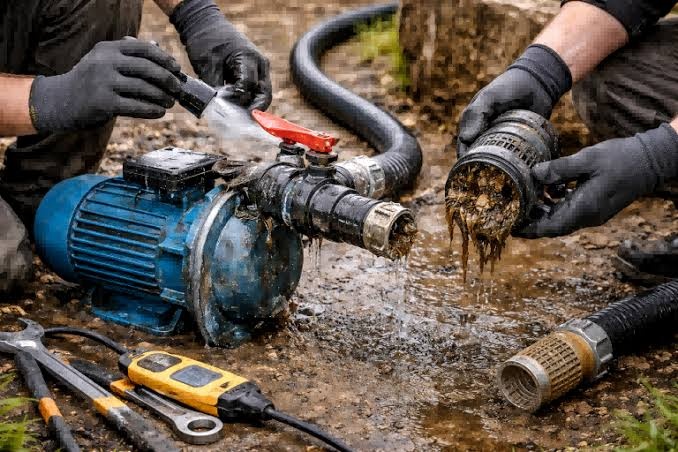
A reliable water supply is essential for everyday life. From showers and washing machines to kitchen faucets and outdoor fixtures, homeowners depend on their water systems to provide consistent pressure and flow. When a pump suddenly stops operating, the problem can interrupt an entire household and may leave homeowners wondering what went wrong.
In 2026, residential water systems are becoming more advanced through variable-speed pumps, electronic pressure controls, smart sensors, leak detection, and remote monitoring. These technologies can improve efficiency and reliability, but understanding the basics of pump operation remains important.
If you are asking, why is my water pump not working, several possible causes should be considered before assuming the pump itself needs replacement.
A water pump requires an appropriate electrical supply to operate. A tripped circuit breaker, blown fuse, faulty disconnect, or electrical problem can prevent the motor from starting.
Homeowners can check whether the appropriate breaker has tripped, but repeatedly resetting a breaker is not recommended if it continues to shut off.
Repeated electrical interruptions may indicate a more significant problem involving the pump motor, wiring, controls, or electrical system.
Electrical repairs should be handled by qualified professionals rather than attempted without the appropriate training and equipment.
Many residential water systems use a pressure switch to control pump operation. The switch monitors system pressure and signals the pump to start when pressure falls below a predetermined level.
A malfunctioning pressure switch can prevent the pump from activating even when water demand is present.
Debris, mechanical wear, damaged contacts, or electrical problems can affect switch performance.
Modern systems increasingly use electronic pressure controls that can provide more precise monitoring than traditional mechanical switches.
A pump cannot deliver water if an adequate water source is unavailable.
Depending on the system, problems may involve a well, storage tank, intake line, supply pipe, or another component upstream of the pump.
A low water level or restricted intake can cause the pump to operate incorrectly or fail to deliver sufficient water.
This is why professional diagnosis should consider the complete water-delivery system rather than automatically replacing the pump.
Some pump systems require proper priming to operate correctly. If air enters the system, the pump may lose its ability to move water efficiently.
Leaks, faulty valves, damaged connections, or improper installation can contribute to air entering certain systems.
Symptoms can include sputtering faucets, fluctuating pressure, unusual pump operation, or little to no water delivery.
Homeowners should follow the manufacturer's instructions for their specific equipment rather than applying a generic priming procedure.
Variable-speed technology is an important trend in residential water systems during 2026.
Traditional pumps may operate at a limited number of speeds, while variable-speed models can adjust motor output according to actual water demand.
When household demand is low, the pump can operate at reduced capacity. When multiple fixtures are being used, it can increase output.
This approach can provide more consistent pressure while potentially reducing energy consumption and unnecessary cycling.
However, variable-speed systems require compatible controls and proper installation to achieve their intended performance.
Smart water technology is also expanding. Modern pressure sensors and connected controllers can monitor water pressure and system activity continuously.
Some systems can send notifications when pressure changes unexpectedly or when unusual operating conditions occur.
For homeowners, this can provide valuable information without requiring constant manual inspection.
A sudden pressure drop, for example, could indicate a developing plumbing problem, equipment issue, or possible leak.
Smart monitoring cannot prevent every failure, but it can provide earlier awareness of unusual system behavior.
Water damage can be expensive, making leak detection an increasingly important component of smart-home technology.
Connected leak sensors can monitor areas near pumps, water heaters, appliances, and plumbing fixtures.
When moisture is detected, compatible systems may send alerts to a smartphone or other connected device.
Some advanced systems can also monitor abnormal water usage patterns. Unexpected continuous flow may indicate a hidden leak that would otherwise remain unnoticed.
Integrating water monitoring with a smart-home system can provide homeowners with another layer of protection.
Changes in pump sound can provide useful warning signs.
Grinding, buzzing, rattling, clicking, or repeated starting and stopping may indicate an issue that deserves professional attention.
The cause could involve mechanical components, electrical controls, pressure problems, or another part of the water system.
Homeowners should avoid dismantling pump equipment simply to investigate an unfamiliar noise. Professional inspection can identify the underlying issue more safely and accurately.
If a pump is operating continuously without establishing normal water pressure, allowing it to run for an extended period may place unnecessary stress on the motor and other components.
Continuous operation can result from several conditions, including inadequate water supply, pressure-control problems, leaks, restricted flow, or mechanical issues.
If the pump does not behave normally after basic manufacturer-approved checks, turning to professional service is generally preferable to repeatedly restarting the equipment.
Regular maintenance is one of the most effective ways to improve water-system reliability.
Depending on the equipment, professional maintenance may include checking pressure controls, inspecting electrical components, evaluating valves, examining tanks, and assessing pump performance.
Homeowners should also pay attention to changes in water pressure, flow, pump cycling, and operating sounds.
Early attention to unusual behavior may help prevent a minor issue from becoming a complete system failure.
If you are still asking, why is my water pump not working, after checking basic power and manufacturer-approved controls, professional diagnosis can help determine the actual cause.
A qualified technician can evaluate the pump, controls, water source, plumbing connections, pressure system, and electrical components.
Professional service is particularly important when there are repeated electrical trips, visible water damage, unusual burning odors, severe pressure fluctuations, or complete loss of household water.
Residential water technology is becoming smarter and more efficient. Variable-speed pumps, electronic controls, pressure sensors, leak detection, remote monitoring, and predictive maintenance are changing how homeowners manage water delivery.
However, advanced technology does not eliminate the need for proper installation and maintenance.
The best approach is to combine modern monitoring technology with routine inspections and timely professional service. By paying attention to warning signs and understanding the major components of a water system, homeowners can improve reliability, protect their property, and maintain dependable water service throughout 2026 and beyond.

This post has been authored and published by one of our premium contributors, who are experts in their fields. They bring high-quality, well-researched content that adds significant value to our platform.










Learn SEO, social media, and digital marketing strategies to grow your online business smarter and faster.
